Why Your Team Keeps Missing Deadlines and How a Task Dashboard Can Help

Lorem ipsum dolor sit amet, consectetur adipiscing elit. Ut elit tellus, luctus nec ullamcorper mattis, pulvinar dapibus leo.

You have a great team that’s dedicated, hardworking, and working the hours, but deadlines are still slipping. Sound familiar? For most growing agencies, missed deadlines aren’t a people problem. They’re a systems problem. If work is spread out across multiple emails, Slack threads, and spreadsheets, no one has a complete view of the situation, and the time that someone realizes a task is “off track” is usually too late.  A task management dashboard can change that, giving every stakeholder a real-time view of what’s due, who is responsible, and how things are progressing.
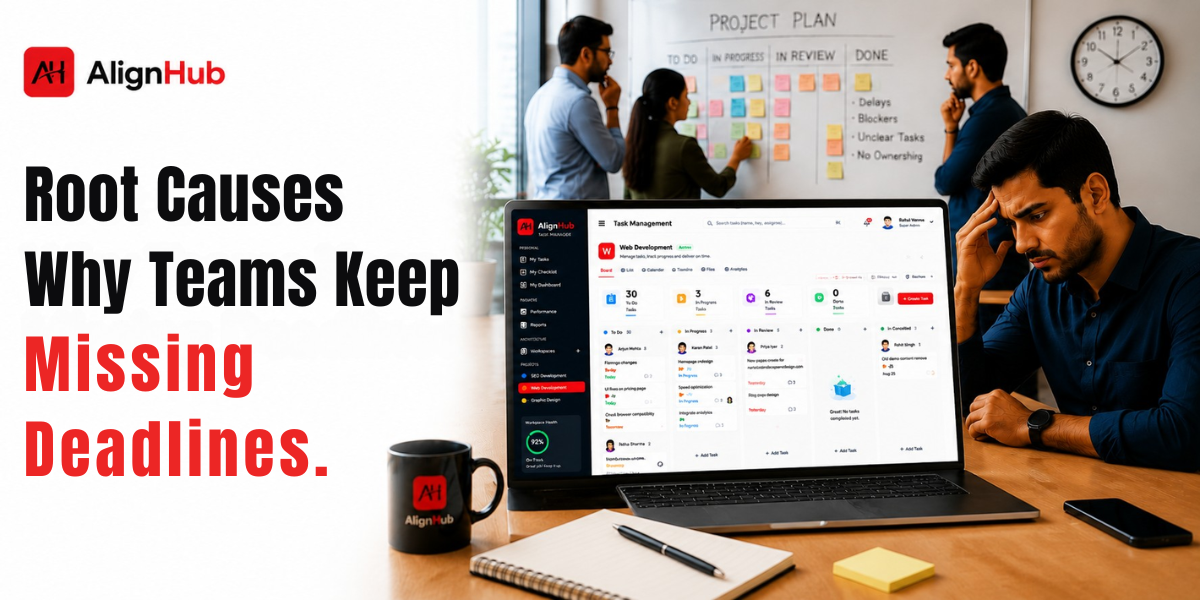
The Real Cost of Missed Deadlines in Agency Operations

While deadline slippage can be an internal inconvenience, its impact can extend beyond just one project.
  • Impact on Client Trust and Retention

When things don’t go as planned, it degrades customer trust easily. One missed submission can affect the agency’s reputation, and late work may result in low-quality work.
  • Internal Friction and Team Burnout

Every missed deadline has a team running in catch-up mode. Constant periods of rush drive overwork, stress, and high employee turnover. Ongoing context switching pulls skilled team members away from the strategic, high-value work that actually drives growth.
  • Financial Bottom Line

Unplanned project delays inflate operational costs. For agencies working on fixed-fee retainers, every hour spent firefighting comes straight out of the margin. There’s no need to doubt the case for staying ahead of deadline problems with the right tools, such as a task management dashboard.

6 Root Causes Why Teams Keep Missing Deadlines

Root Causes Why Teams Keep Missing Deadlines
  • Invisible Progress & Status Hiding in Silos

Progress updates buried in email threads or personal notebooks are invisible to the people who need them most. Managers frequently don’t know a task is behind schedule until that day arrives when intervention becomes unhelpful. A task tracking dashboard is a great solution to this problem, as it brings the progress to the forefront at any point in time.
  • Unrealistic Time Estimates & The Planning Fallacy

The duration of tasks is often estimated by teams on an ideal basis and not on the basis of historical capacity. If there is a slight delay for whatever reason, whether it is the client’s revision, a day off, or if one tool is not being used, the whole timeline collapses.
  • Hidden Dependencies & Unresolved Bottlenecks

If Task B depends on Task A and there is no confirmation that Task A is complete, then cascading delays are inevitable. One of the quickest ways to ruin a project pipeline is to have untracked dependencies.
  • Workload Imbalance and Over-Allocation

Assigning work without visibility into team capacity or active time off turns high performers into bottlenecks while others remain underutilized. To prevent these imbalances from turning into crises, a workload management dashboard can capture them, allowing managers to adjust workloads in real time as needed to keep delivery schedules on track. 
  • Fragmented Tools & Communication Chaos

Splitting the tasks of credentials, task lists, leave tracking, and communication into separate tools introduces serious disconnects. Context becomes lost, tasks are forgotten, and team members end up wasting hours searching for client access details that should take seconds to find.
  • Lack of Priority Clarity

When everything is marked “Urgent,” nothing is. Workers gravitate toward the less demanding work they can get done in a few moments, and the work that’s due on the critical path is ignored. 

How a Task Management Dashboard Solves Deadline Slippage

A good dashboard is not only task-oriented, but it establishes team-wide responsibility.
  • Centralized single source of truth: A task tracking dashboard brings all files, notes, owner info, and due dates together in one view so you don’t have to waste time searching Slack or inboxes.
  • Real-time visibility & early warning indicators: Color-coded project statuses On Track, At Risk, and Delayed let managers intervene before they breach a deadline, not after.
  • Automated alerts via deadline tracking software: Automated reminders before due dates ensure tasks are completed on time without requiring manual follow-up from team leads.
  • Workload visualization: A project tracker dashboard lets team leads distribute tasks according to live bandwidth and active leave schedules, keeping allocation fair, realistic, and data-driven.

Key Features to Look For in an Effective Project Tracker Dashboard

Not all dashboards are built equally. When evaluating tools, prioritize features that directly address the root causes above:

Deadline Management Features

Feature
Why It Matters for Deadline Management
Centralized Task Manager
Connects task ownership, priorities, and deadlines in one view.
Live Status Indicators
Helps you see what other people are doing without having to organise sync meetings.
Integrated Operations Data
Links leave management and user roles directly to project capacity.
Access Control & Vault Security
Prevents delays caused by missing passwords or client access details.
All these features are built into AlignHub with the objective of closing operational gaps and preventing deadlines from slipping. 
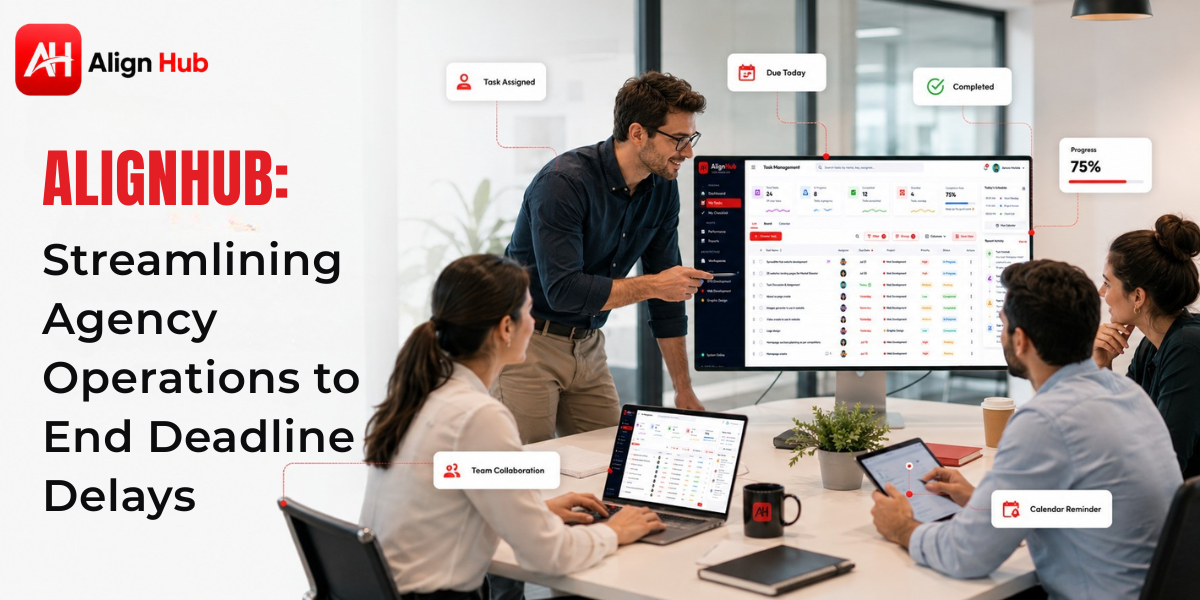
AlignHub: Streamlining Agency Operations to End Deadline Delays

AlignHub: Streamlining Agency Operations to End Deadline Delays
  • Built Natively for Growing B2B Agencies

AlignHub brings together all operations, tasks, team credentials, leave management, and payroll tracking into one. No switching platforms, no lost context, no version confusion, just a task management dashboard that works just like your agency. 
  • Integrated Task Manager Module

Assign tasks, set clear priorities, and maintain accountability without tool fragmentation. The built-in task tracking dashboard keeps everyone in the team informed of what they are responsible for, when it’s due, and what’s holding them back in real-time. 
  • Eliminating Blockers with Built-In Access Control

AlignHub’s direct integration with its credential vault ensures team members never miss a deadline because of lost passwords or delayed client login access.
  • Smart Resource Management

This seamless integration with AlignHub’s leave management module ensures that no work is given in the absence of team members. The workload management dashboard is based on reality, not assumptions, and keeps timelines intact while keeping capacity planning accurate.

Conclusion

Missing deadlines isn’t an effort problem; it’s a visibility and systems problem. When work is fragmented across tools, delays are not a question of if but when. A central task management dashboard brings control, accountability, and agency leadership to projects, restoring your control, creating accountability, and providing agency leaders with early warnings to keep projects on track.  Explore how AlignHub unifies tasks, credentials, and team operations into one system and stop letting avoidable delays define your delivery reputation.

Stop juggling 10 different tools. Run your agency from one workspace.

Consolidate your credentials, tasks, payroll, leave, and asset management into a single platform built specifically for high-growth agencies.

Table of Contents

Start using ClickUp today